
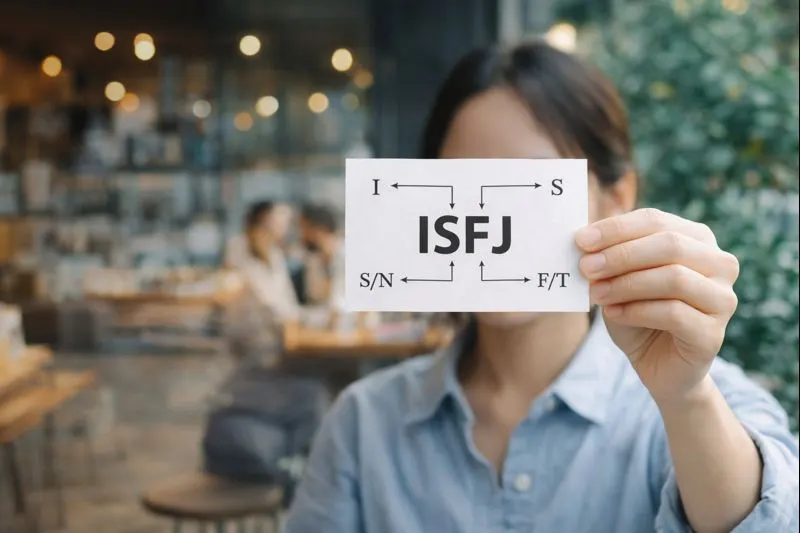
MBTI has become so popular that it’s almost a social necessity—sometimes even a shorthand for workplace communication: “Are you an I or an E?” “Find a P-type to slack with, and avoid J-types who push for constant progress.”
But MBTI isn’t just gossip fuel or an icebreaker game. It can also serve as a low-energy survival guide at work—one that quietly reveals where each personality’s real strengths lie.
In this article, we won’t dive into mysticism. Instead, we translate the 16 personality types into plain, workplace-ready language: breaking down each type’s talents and advantages, clearing up common workplace misunderstandings, and offering personalized, practical tips for “more slow productivity and less internal friction.” The goal is simple—to help you find your own work rhythm and move forward without burning out.
1. Why has MBTI become a nationwide social phenomenon?
1.1 Social necessity: A low-cost icebreaker tool, no more awkward silences
How difficult is socializing for today's young people? Meeting new colleagues can only lead to awkward small talk about the weather, friends' gatherings can be so quiet you could hear a pin drop, and striking up a conversation with strangers feels too forced. MBTI perfectly addresses this pain point. It's like a 'universal social formula.' Whether you're a newcomer at work or meeting friends for the first time, just ask, 'What's your MBTI?' and the conversation flows instantly. No need to rack your brain for topics; you can chat about 'I/E person attributes' or 'preferring solitude or socializing,' which is non-offensive and quickly bridges the gap. Especially in workplace socializing, using MBTI as an icebreaker is safer. For example, when coordinating work with a new partner, saying 'Oh, you're a J person, no wonder you're so organized; I, as a P person, complement you perfectly' can quickly establish rapport and significantly reduce communication costs.
1.2 MBTI is a 'personality manual' that understands workers better than astrology
Compared to the vague division of only 12 types in astrology, MBTI is practically tailor-made for working individuals. It divides personalities into 16 types using four dimensions: E/I (source of energy), S/N (cognitive style), T/F (decision-making style), and J/P (lifestyle). It can also summarize your personality and behavior based on test results, maximizing accuracy.
For those of us under high work pressure, it's like an easy-to-understand 'personality manual.' There's no need to worry about expressing oneself too bluntly; a simple label can easily convey the message and greatly reduce the cost of mutual understanding—this is also the key reason why people are willing to take the test voluntarily.
If you haven't taken the MBTI test yet or want to take it again, you might want to try this more authoritative website. "MBTI 16 Personality Test"
2. Complete Analysis of 16 MBTI Personalities: Find Your 'Slow Productivity' Personality
Many people take the MBTI test just for fun, but if used correctly, it can actually serve as a very useful 'low-energy workplace survival guide.'
We've translated all 16 personality types into the language of working professionals to help you understand:
Why are you often misunderstood? Why do some things come effortlessly to you? Why do certain work patterns exhaust you to the point of questioning your life? And—how to engage in slow productivity more naturally without being noticed?
1. ISTJ Logistician
- Core strengths: meticulous and pragmatic, strong sense of responsibility, steady execution, and excellent attention to detail
- Traditional Prejudices: Rigid, Inflexible, Lacking Imagination
- Your Talent Comfort Zone: Reliable Order Builder
- Slow Productivity Strategy: Establish standardized workflows to reduce rework and avoid last-minute tasks
2. INFJ Advocate
- Core Strengths: Deep Insight, Idealism, Skilled in Planning, and Empathetic with Vision
- Traditional Prejudices: Out of touch with reality, overly sensitive, overthinking
- Your Talent Comfort Zone: Long-term Value Planner
- Slow Productivity Strategy: Reserve 30 minutes daily for deep thinking, organize thoughts with mind maps, reject distractions from trivial tasks
3. INTJ Architect
- Core Strengths: Meticulous logic, strong strategic thinking, highly focused and efficient, adept at solving complex problems
- Traditional prejudices: indifferent, aloof, controlling
- Your talent comfort zone: efficient problem solver
- Slow productivity strategy: adopt the 'task breakdown + focus block' work method, reduce unnecessary meeting participation, and use documents to sync progress
4. ISTP Connoisseur
- Core strengths: strong hands-on ability, flexible and pragmatic, good adaptability and adept at improvisation
- Traditional biases: short-lived enthusiasm, lack of patience, dislike for planning
- Your talent comfort zone: flexible practical explorer
- Slacking strategy: reserve flexible work time, prioritize hands-on tasks, avoid being constrained by fixed schedules
5. ISFJ Guardian
- Core strengths: strong empathy, considerate, good at coordination, and value team harmony
- Traditional biases: people pleaser, overcommitting, inability to say no
- Your talent comfort zone: team emotional stabilizer
- Slow productivity strategy: set 'helping priorities,' complete your core tasks first, then selectively offer support
6. ISFP Explorer
- Core strengths: keen perception, love of life, outstanding aesthetic sense, and focus on experiential quality
- Traditional biases: unambitious, procrastination, stress avoidance
- Your talent comfort zone: creator of life quality
- Slow productivity strategy: combine work with interests, adopt an 'immersive work + short breaks' model, and reject meaningless competition
7. INFP Mediator
- Core strengths: strong empathy, delicate inner world, rich creativity, and adherence to values
- Traditional biases: indecisive, sensitive, unrealistic
- Your talent comfort zone: deep emotional resonance
- Slow productivity strategy: prioritize decisions in advance, document emotions to clarify thoughts, refuse to be swayed by others' emotions
8. INTP Logician
- Core strengths: quick thinking, strong curiosity, rigorous logic, and adept at deep thinking
- Traditional biases: social barriers, procrastination, aiming high but lacking practical skills
- Your talent comfort zone: deep-thinking researcher
- Slow productivity strategy: set 'thinking-output' time points, use asynchronous communication instead of face-to-face interaction to reduce energy consumption
9. ESTP Entrepreneur
- Core strengths: energetic, sociable, quick to react, and strong execution skills
- Traditional Prejudices: Impulsive, Restless, Lack of Long-term Planning
- Your Talent Comfort Zone: Efficient Social Facilitator
- Slow Productivity Strategy: Select High-Value Social Occasions, Set Social Duration in Advance, Use Fragmented Time for Simple Communication Tasks
10. ESFP Performer
- Core Strengths: Enthusiastic and Cheerful, Highly Influential, Expressive and Adaptable
- Traditional prejudice: superficial, attention-seeking, lack of focus
- Your talent comfort zone: atmosphere creator
- Slow productivity strategy: integrate creative output into work, adopt a 'short and frequent' work method to avoid long, tedious tasks
11. ENFP Campaigner
- Core strengths: rich creativity, enthusiastic optimism, strong associative skills, and infectious energy
- Traditional biases: short-lived enthusiasm, starting strong but finishing weak, unrealistic
- Your talent comfort zone: innovator and inspiration catalyst
- Slow productivity strategy: use an 'inspiration list' to record ideas, break them down by importance for execution, and avoid advancing multiple projects simultaneously
12. ENTP Debater
- Core strengths: active thinking, adept at debate, eloquent, and highly innovative
- Traditional Prejudices: Argumentative, Rebellious, Impatient
- Your Talent Comfort Zone: Provider of Diverse Perspectives
- Slow Productivity Strategy: Use Debate Thinking for Plan Optimization, Set 'Discussion Time Limits' to Avoid Meaningless Internal Conflict
13. ESTJ General Manager
- Core Strengths: Strong Organizational Skills, Decisive, Responsible, and Good at Coordination
- Traditional biases: strong-willed, stubborn, unapproachable
- Your talent comfort zone: efficient organizer and coordinator
- Slow productivity strategy: clearly delegate tasks, manage the team with standardized processes, and avoid micromanaging to conserve energy
14. ESFJ Consul
- Core strengths: excellent communication, considerate and attentive, strong organizational skills, and value team harmony
- Traditional biases: over-involvement, being overly concerned, lack of independent opinion
- Your talent comfort zone: team coordination and service provider
- Slow productivity strategy: establish a sense of boundaries, prioritize core work, and refuse to take on additional tasks without limits
15. ENFJ Educator
- Core strengths: strong leadership, high empathy, skilled at guidance, and responsible
- Traditional biases: controlling, preachy, overly giving
- Your talent comfort zone: Team growth facilitator
- Slow productivity strategy: Adopt 'guided management' to inspire team autonomy, reserve personal recharge time, and avoid overexertion
16. ENTJ Commander
- Core strengths: Strong strategic thinking, decisive, outstanding leadership, and a strong sense of purpose
- Traditional prejudice: cold, strong-willed, highly controlling
- Your talent comfort zone: goal-oriented navigator
- Slow productivity strategy: focus on core objectives, simplify processes to eliminate redundancies, delegate non-core tasks, avoid the all-rounder persona
3. Should you take the MBTI test?
In the past, we were always bound by 'standard personality': be outgoing, be decisive, be ambitious. But when MBTI came out, it broke this singular perception, providing a gentle reason for our 'uniqueness' with the logic of 'innate personality.' Now, I finally understand: indecisiveness is not a flaw, it's the deep contemplation of an INFP; not liking socializing is not being antisocial, it's the energy conservation of an INTJ; not wanting to strive in the workplace is not lack of ambition, it's the life-first philosophy of an ISFP. This shift is like giving us a 'legitimate pass to refuse internal exhaustion,' no longer needing to criticize ourselves to please others. This aligns perfectly with the 'slow productivity' logic advocated by Playfish Lab: there's no need to force yourself to become the perfect model in others' eyes; living at your own pace is the most relaxed and efficient.
3. 1 Practical Usage: Finding a Life and Work Rhythm That Suits You
Don't just shelve the results after the test; it's only useful when applied! For instance, someone discovers they are an ENFJ, tries organizing events, and finds they have great leadership skills; another person learns they are an INTJ, focused and not fond of socializing, so they leave a sales position that requires frequent socializing and switch to technical research, where they thrive; more people start rejecting internal conflict: they don't force themselves to mimic extroverts in social settings, nor do they criticize themselves for not being decisive enough, gradually finding their comfortable rhythm.
This choice of 'finding the right rhythm and not blindly following trends' is at the core of slow productivity and is the foundation of the FIRE movement's 'control your life and accumulate free capital.' Therefore, the most meaningful way to use the MBTI is: don't let labels bind you, use it to help make more comfortable choices.
4. How to Turn MBTI into a Guide for an Anti-Hustle Lifestyle
4.1 Advanced Usage: Aligning with Slow Productivity for an Easy Transition to FIRE Freedom
In today's society, "succeeding in the rat race" is often seen as the only good standard, which is really stressful.
In the workplace, we have to work 996 hours to climb the career ladder, in social settings, we have to be the center of attention, and in life, we have to excel in every aspect. We, the working people, are wrapped in anxiety and often can't help but wonder: working overtime until midnight makes us question, "Is climbing the career ladder the only definition of success?"; being forced to participate in ineffective social activities can be exhausting to the point of breakdown, "Why do we have to be extroverted?"; when struggling with choices, we self-doubt, "Is being indecisive really that bad?"
MBTI happens to provide a gentle answer to these questions—this is also the core reason why it has become so popular.
It's like a gentle friend, telling us: there is no absolute "good personality," each personality has its own suitable scenarios and advantages. You don't have to force yourself to be a "hexagonal warrior"; accepting your little differences can actually make life more comfortable. More importantly, MBTI is essentially an extension of slow productivity: it doesn't force you to become a "more efficient machine," but rather acknowledges that everyone has their own rhythm and way of distributing energy. This is also what Playfish Lab has always wanted to convey: whether at work or in life, finding your own rhythm can prevent burnout and gradually accumulate the "risk-resistant capital" needed for FIRE.
As Playfish Lab often says: true growth is not about fixing all your weaknesses, but about amplifying your strengths; true survival wisdom is not about exhausting yourself in the rat race, but about moving forward at a comfortable pace. The explosive popularity of MBTI is essentially a "self-reconciliation conference" for young people—we no longer obsess over meeting others' expectations and start learning to embrace our true selves. And this state is precisely the important premise for practicing slow productivity and moving towards FIRE freedom.
4.2 Your MBTI can change, don't be 'bound' by labels
Finally, it's crucial to emphasize a key understanding: MBTI has never been a static 'personality conclusion'; it's a dynamic process. Many people might have experienced that the results of MBTI can vary at different stages, which is completely normal. It is a tool to understand your current self, not a shackle to limit your future potential.
Many people easily fall into the misconception of using the four letters as a 'shield against growth'—for example, 'I'm a P person, so I can always procrastinate' or 'I'm an I person, so I don't need to learn communication.' This completely contradicts the core value of MBTI. More importantly, ignoring its dynamic nature can trap you in the 'label fixation' pitfall: believing you are 'born this way,' thereby giving up the potential for growth in different scenarios.
The truly correct usage is to treat it as a compass for optimizing your energy path: if you are currently an I person, actively seek space for solitary work rather than forcing ineffective social interactions; if you are currently a P person, use the 'pressure-driven efficiency' trait to reasonably plan deadlines rather than completely slacking off. Also, embrace change—if one day you find yourself leaning more towards being an E person or a J person, don't be surprised; it's just a natural adjustment to your life rhythm, not a 'mistake.'
Once you understand this, you'll realize: the reason MBTI has become so popular on social networks is that it provides an outlet to combat anxiety, not to confine us within boundaries. Playfish Lab wants to tell everyone: rather than being defined by dynamic personality labels, being able to flexibly adjust and continuously grow is the least effortful survival wisdom. Accept your current rhythm and allow for future changes, without forcing yourself to 'always fit a certain label,' so you can practice slow productivity, accumulate risk-resistant capital, steadily approach FIRE freedom, and live more clearly and comfortably.